






Technical Details
| Specification | |
|---|---|
| Product code | FP-MF900-VETS |
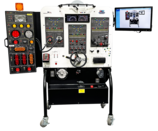
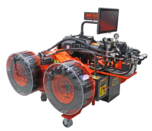
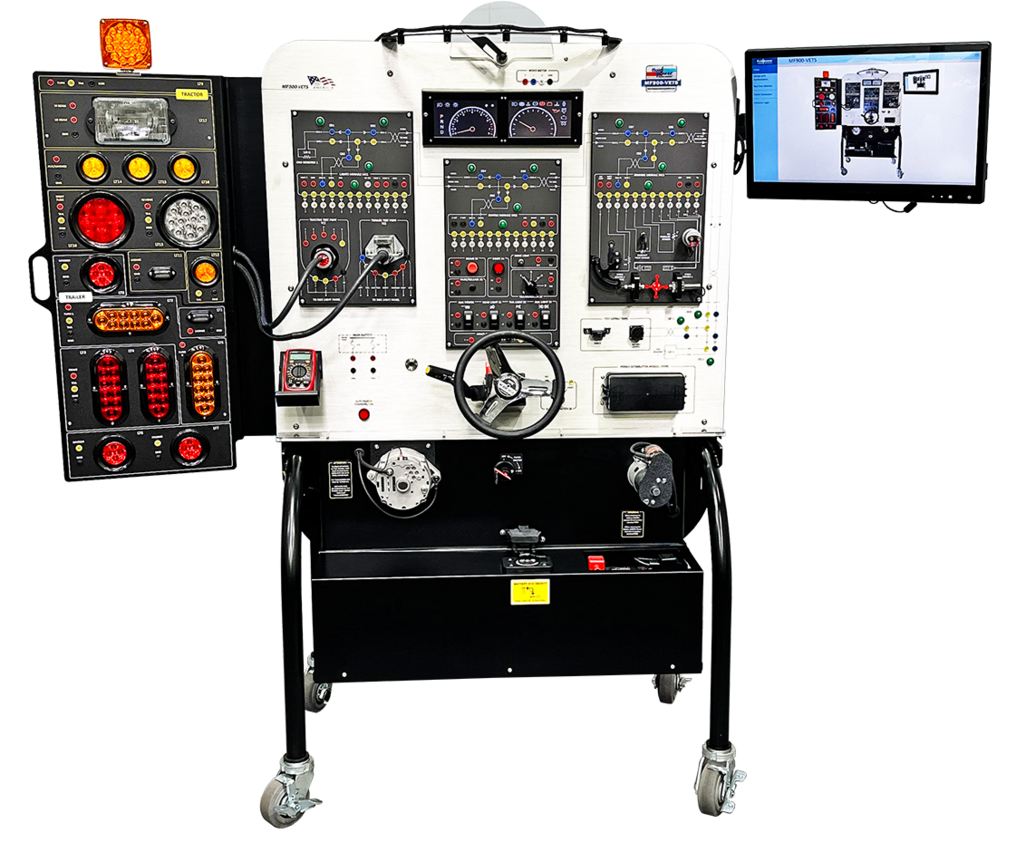
Key Features & Benefits | Built for Modern Automotive Electrical Education : Teaches fundamentals of electrical circuits, automotive systems, starting/charging systems, multiplexing (J1939 + OBD-II), DTCs, sensor outputs, LED vs. incandescent lighting, and more. Interactive Fault Generation for Real-World Diagnostics : Instructors can create electrical faults manually or via the onboard touchscreen computer, allowing students to diagnose true-to-life failures on a complete automotive network. Learn Multiplexing & CAN-BUS Communication : Students understand how modules communicate, how messages travel across a network, and how failures occur in J1939/OBD-II systems, including viewing messages in real time. Full Starting & Charging System Simulation : Includes starter motor, alternator charging system, battery current sensors, cold/hot start modes, and testing of battery, crank, and load current. Automotive Sensors Built Into the Panel : TPS, coolant temperature, oil pressure, hall-effect speed sensors, magnetic sensors, and more are mounted and ready for testing and signal analysis. Banana-Plug Test Points Throughout the System : Students gain safe, repeatable access to circuits for voltage, resistance, current, and signal testing, reinforcing best diagnostic practices. Teaches Students to Avoid Unnecessary Module Replacement : Learners build real troubleshooting skills, not “parts changing” habits, saving employers time and cost. Colleges Benefit From Industry-Aligned, Safe Training Tools : Attract students, reduce accidents, and deliver job-ready graduates while using systems purpose-built for safety and instructional clarity. |
|---|---|
Specifications | Training Capabilities : Fundamentals of electrical - electronic circuits / Automotive lighting systems (LED & incandescent) / Starter system (cold & hot start) / Alternator charging system / Multiplexing & CAN-BUS systems (J1939, OBD-II) / Sensor reading & interpretation (TPS, coolant, oil pressure, speed) / DTC generation and interpretation / Troubleshooting with real failure modes Hands-On Activities : Starter system diagnosis (cold - hot start) / Alternator load & battery current testing / Identification of modules and signal paths / Operation of Lights, Sensor, and Switch modules / Inputs & outputs analysis (digital, analog, pull-up, ladder resistor types) / Fuse & relay identification (Power Distribution Module) / Multiplexing communication between modules / Reading DTCs with J1939 or OBD-II readers / Troubleshooting electrical faults using software-generated failures Included System Components : Full starting system with 12V starter & 12V battery / Alternator charging system with current sensors / LED & incandescent lighting panel / Multi-function steering-wheel switch assembly / Wiper motor / Automotive gauge & indicator panel / Power distribution module (relays & fuses) / Three (3) electronics modules for multiplexing system / Magnetic and Hall-effect speed sensors / Coolant temperature & oil pressure sensors / TPS sensor / Electronic connectors with visual indicators / Banana-plug test points throughout Software & Diagnostic Tools : Touchscreen computer with interactive schematics / Fault generation software / Real-time J1939 message viewing / Support for generic J1939 or OBD-II readers Student Learning Outcomes : Students learn to: Troubleshoot automotive electrical systems, Understand multiplexing & communication failures, Interpret automotive schematics, Diagnose voltage drops & poor grounds, Analyze electronic component input/output behavior, Use oscilloscopes, protocol analyzers, and advanced diagnostic tools Construction & Design : Automotive-style panel layout, Steel frame with caster mobility, Color-coded system domains, Safe, enclosed operation with clear visibility Electrical Requirements : 110 VAC, 20-amp dedicated circuit / 12-gauge, 3-conductor extension cord (50 ft max) if needed Dimensions & Shipping : Shipping weight: 920 lbs (417 kg) / Shipping dimensions: 78″ H × 48″ W × 30″ D |
Curriculum | Overview: The MF900-VETS curriculum prepares learners to diagnose modern automotive electrical systems and multiplexed communication networks through interactive labs and fault-based exercises. Topics Covered: Starting & charging systems / Lighting circuits (LED & incandescent) / Sensor diagnostics (pressure, temperature, speed) / Module communication (CAN-bus / J1939 / OBD-II) / Signal interpretation & measurement / Fault isolation in multiplexed systems / Electrical schematic reading |